Rigging Safety
Rigging safety is a critical discipline within industrial health, safety, and environment (HSE) management that focuses on controlling hazards associated with lifting, moving, and positioning heavy loads using cranes, hoists, forklifts, winches, and rigging equipment such as slings, shackles, hooks, and lifting beams.
Rigging operations are classified as high-risk activities in oil & gas, construction, power generation, marine, mining, manufacturing, and heavy engineering industries. Loads handled during rigging can weigh from a few hundred kilograms to several hundred tons. Any uncontrolled movement, equipment failure, or human error can result in severe injuries, fatalities, or catastrophic asset damage.
The fundamental goal of rigging safety is to eliminate or minimize exposure of workers to suspended and moving loads while ensuring controlled, predictable, and secure lifting operations.
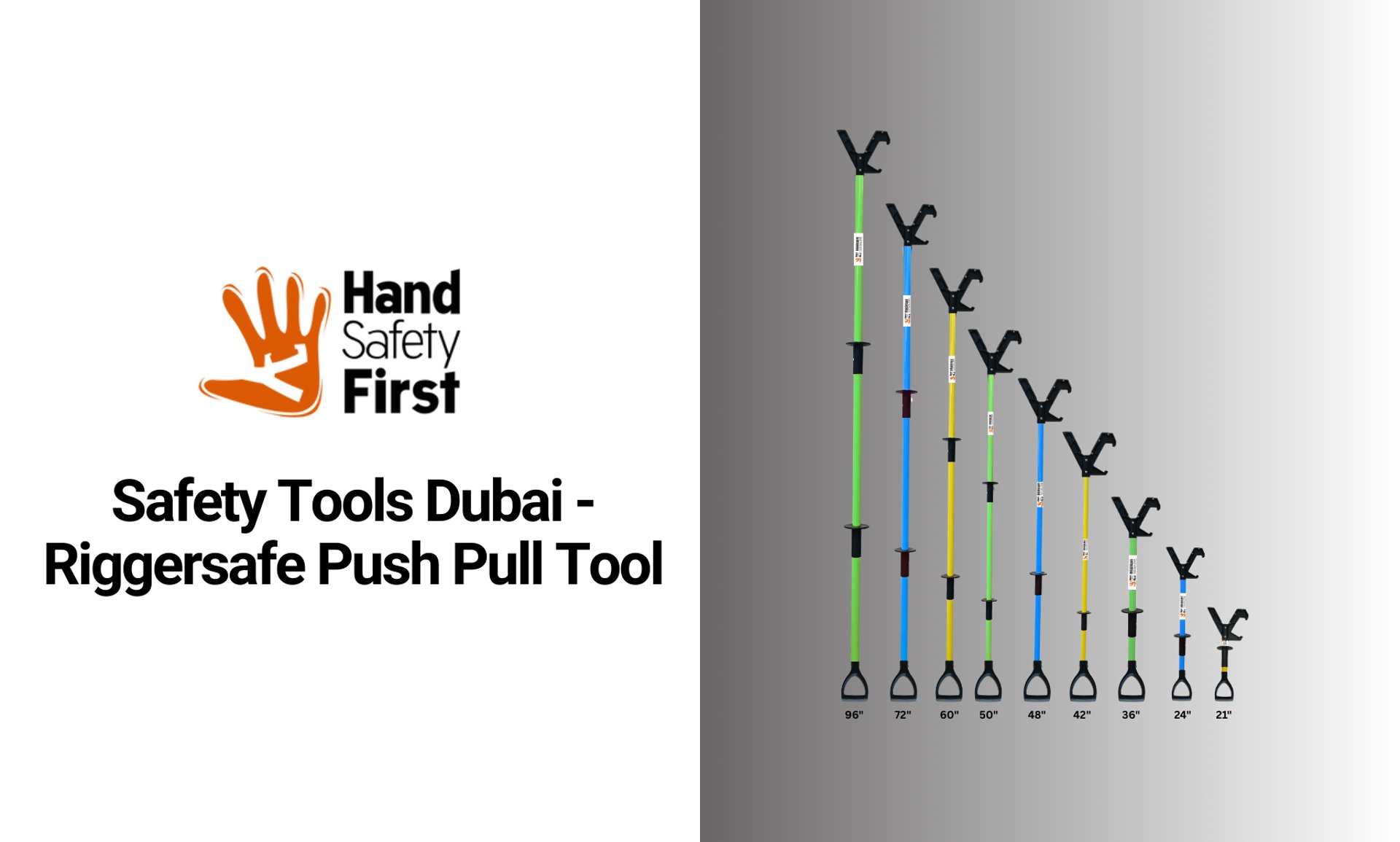
HSF Safety Tools Dubai - Riggersafe Push Pull Tool
Elimination of Human Exposure to Suspended Loads
The primary concept of rigging safety is keeping people away from suspended loads and moving equipment. Suspended loads are unpredictable due to wind, crane motion, shifting center of gravity, or sudden mechanical failure. No worker should stand under or within the path of a suspended load.
Hands-Free Load Control Principle
Hands and body parts must never be placed between a moving load and a fixed structure. Traditional manual guiding of loads with hands is one of the leading causes of hand amputations and crush injuries. Modern rigging safety requires mechanical control methods such as push–pull tools, taglines, guide poles, and remote positioning devices to maintain distance between workers and loads.
Load Stability and Center of Gravity (COG) Control
Understanding the center of gravity is critical in rigging. Loads naturally rotate toward their heaviest side when slings slacken or contact surfaces. Improper rigging can cause sudden rotation, rolling, or tipping.
Rigging safety requires:
Load calculations
Proper sling selection
Balanced rigging configurations
Controlled lifting and landing
Equipment Integrity and Certification
All rigging equipment must be:
Certified
Load-rated
Inspected regularly
Removed from service if damaged
Defective slings, hooks, shackles, or cranes are major causes of dropped loads and fatalities.
Competency and Communication
Only trained and certified personnel should perform rigging tasks. Standard hand signals, radios, and lift supervisors are essential to avoid miscommunication.Rigging safety includes:
Rigger certification
Crane operator licensing
Lift supervisor roles
Toolbox talks and pre-lift briefing
Lift Planning and Risk Assessment
Every lift must be evaluated through:
Job Safety Analysis (JSA)
Lift Plan
Critical Lift Permit
Environmental factors such as wind speed, ground conditions, visibility, and obstructions must be assessed before lifting.
Core Rigging Safety Concept
Rigging safety is built on multiple integrated safety principles, engineering controls, and management systems.
Major Hazards in Rigging Operations
Crush and Pinch Injuries
Occurs when hands or body parts are trapped between loads and structures.
Dropped Loads
Due to overload, rigging failure, crane malfunction, or incorrect rigging configuration.
Swinging Loads
Wind or crane acceleration causes loads to swing, striking workers or structures.
Load Roll or Rotation
When slings slacken, loads rotate unexpectedly due to COG shift.
Rigging Equipment Failure
Worn slings, damaged shackles, or defective hooks can cause catastrophic accidents.
Human Factors
Fatigue, complacency, pressure, and poor communication contribute significantly to accidents.
Hierarchy of Controls in Rigging Safety
Elimination – Remove manual handling near loads
Substitution – Use mechanical tools instead of hands
Engineering Controls – Push–pull tools, taglines, barriers
Administrative Controls – Procedures, permits, training
PPE – Gloves, helmets, boots (last defense)
Role of Push–Pull Tools in Rigging Safety
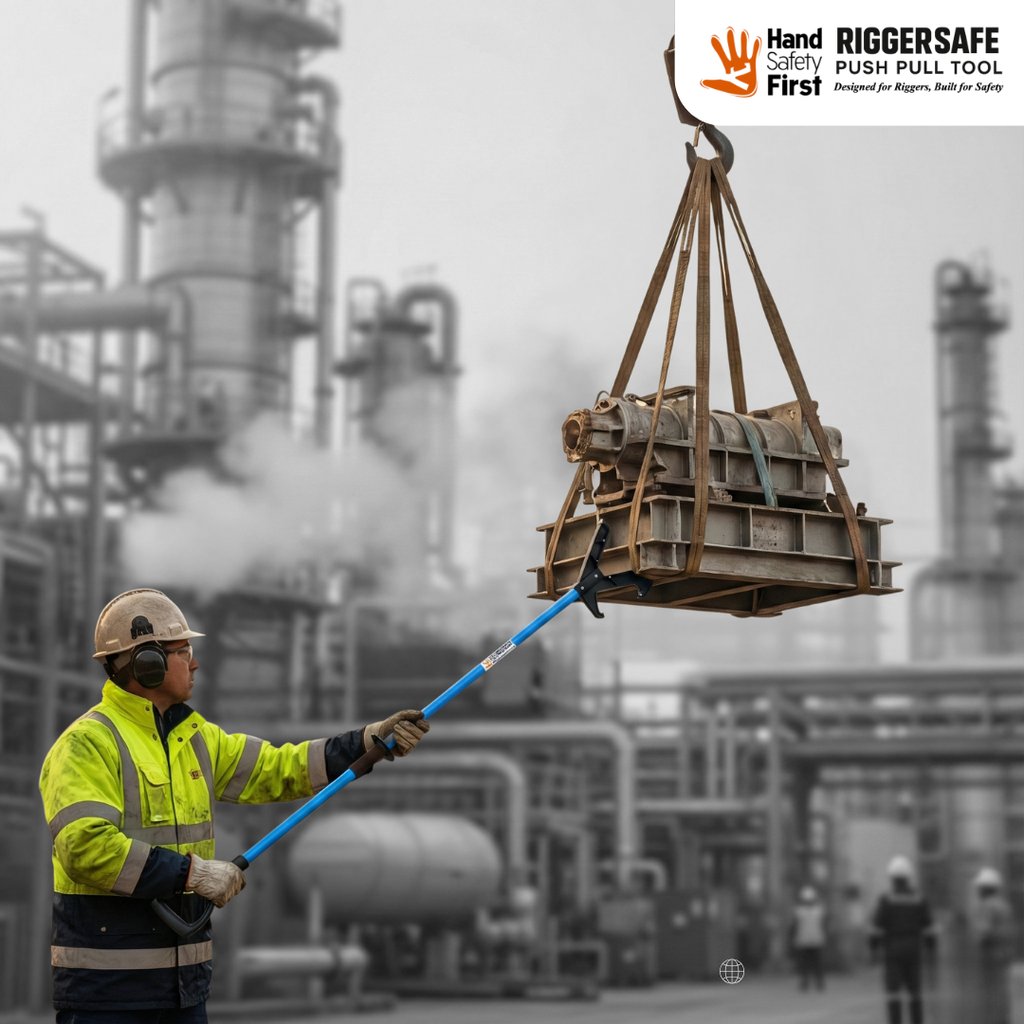
Push–pull tools such as HSF RiggerSafe Push Pull Stick are classified as engineering safety controls. They are designed to keep riggers at a safe distance while allowing precise load control.
Key Safety Functions
Maintain safe distance from suspended loads
Guide, push, pull, and align loads without touching
Control swinging and rotation
Prevent last-inch hand injuries
Improve precision during landing
Reduce ergonomic strain
Critical Rigging Safety Zones
Load Envelope
The space occupied by the load during lifting and landing. Entry into this zone must be prohibited.
Swing Radius
The area where the load can swing due to wind or crane movement.
Crush Zones
Areas between the load and fixed structures such as columns, foundations, pipe racks, vehicles, or walls.
Highest Risk Phase – Load Landing
HSE statistics show most rigging injuries occur when:
Load touches down
Slings go slack
Load shifts or rolls
Workers attempt manual adjustment
Rigging Safety Rule:
Final positioning must always be done using tools, never hands.
Why Rigging Safety Is Important to Riggers
Rigging safety is not only a regulatory requirement but a life-saving necessity for riggers.
Riggers Work in Extreme Hazard Zones
Riggers operate close to heavy moving loads, cranes, and structures. A small error can cause catastrophic injury. Rigging safety keeps riggers outside danger zones and reduces direct exposure.
Prevents Severe Hand and Body Injuries
Hands and fingers are the most exposed body parts during rigging. Crush injuries, amputations, and fractures are common without strict safety controls.Rigging safety eliminates manual contact with loads through engineering controls.
Prevents Fatal Dropped Load Accidents
Dropped loads can kill multiple workers and destroy critical assets. Rigging safety ensures proper load calculations, certified equipment, and controlled lifting procedures.
Protects Against Swinging Loads and Impact
Suspended loads behave dynamically and can strike workers unexpectedly. Rigging safety enforces exclusion zones and controlled guidance tools.
Reduces Human Error and Unsafe Behavior
Fatigue, pressure, and complacency lead to unsafe actions. Rigging safety standardizes procedures and removes reliance on individual judgment.
Ensures Legal and Regulatory Compliance
Rigging safety is mandated by:
OSHA
ISO 45001
HSE UK LOLER
Oil & Gas industry standards
Construction safety regulations
Non-compliance leads to legal penalties, shutdowns, and loss of contracts.
Protects Careers and Families
Rigging accidents can cause permanent disability or death. Rigging safety protects workers’ lives, careers, and their families’ financial security.
Reduces Downtime and Financial Loss
Accidents cause project delays, equipment damage, lawsuits, and increased insurance costs. Rigging safety improves productivity and reduces operational losses.
Builds a Strong Safety Culture
When riggers follow strict rigging safety rules, it creates a culture where safety becomes a core value, not just a procedure.
Rigging Safety Culture and Leadership
A strong rigging safety culture includes:
Zero tolerance for hands on suspended loads
Mandatory use of push–pull tools
Stop-work authority for unsafe lifts
Continuous training and audits
Leadership commitment to safety
ABOUT HSF Safety Tools Dubai - Riggersafe Push Pull Tool
What is the HSF Safety Tools Dubai - Riggersafe Push Pull Tool ?
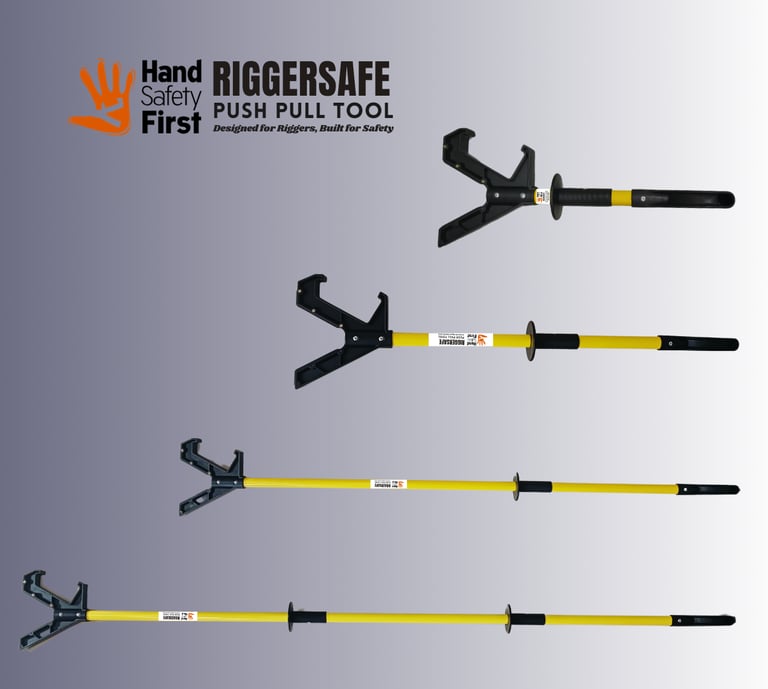
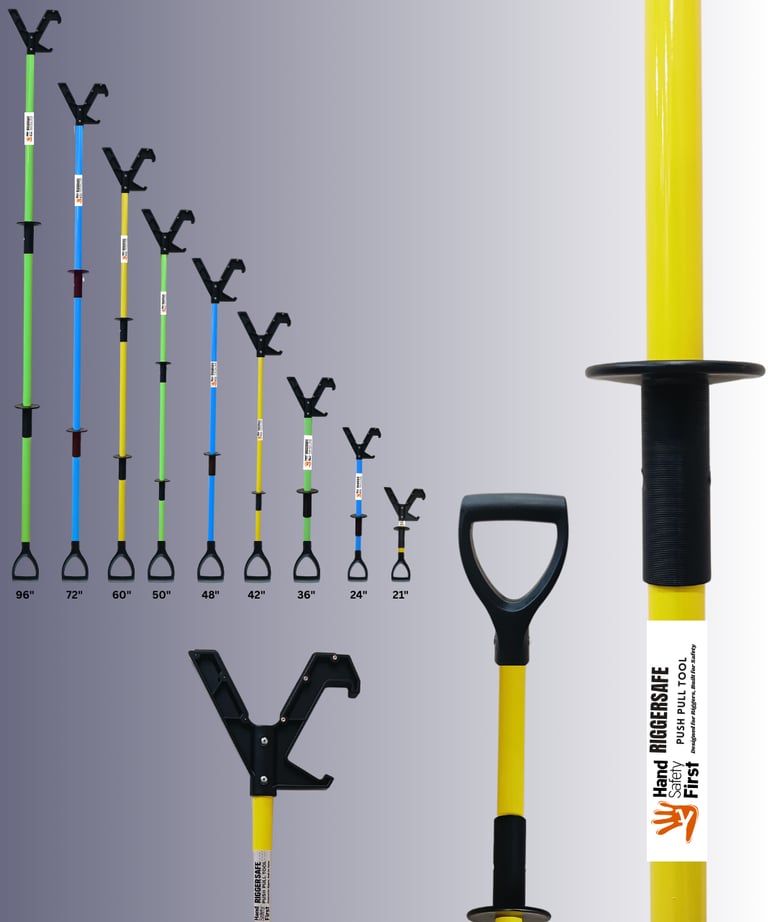
The HSF RiggerSafe is an industrial-grade push–pull tool engineered for environments where traditional manual rigging exposes workers to serious hand injuries. Its rugged fibreglass shaft, ergonomic handle, and wide push head allow precise load control while keeping operators at a safe distance.
KEY FEATURES
Durable Fibreglass Shaft
Non-conductive, corrosion-resistant, and industrial-strength.
Wide Rubberized Push Head (6”)
Ensures effective contact with pipes, beams, crates, and machinery.
Ergonomic D-Handle with Hand Guard
Reduces fatigue and improves grip safety.
High-Visibility Finish
Safety yellow coating for clear visibility in congested zones.
Chemical & Weather Resistant
Built for oil, salt spray, extreme heat, and cold environments.
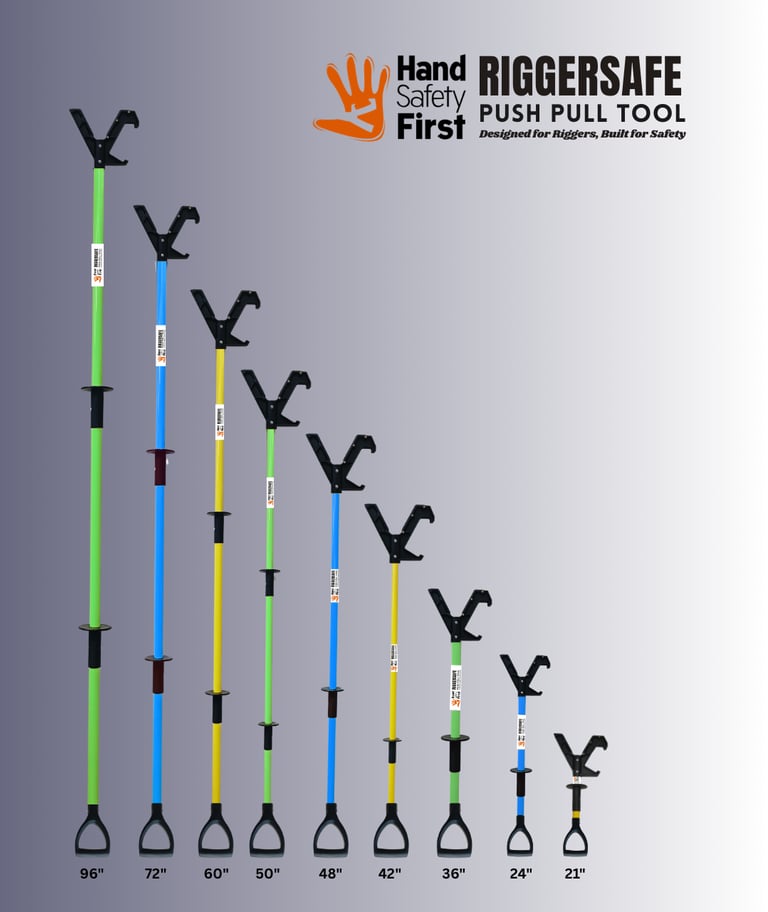
Multiple Length Options
Available in 4 ft, 6 ft, and 8 ft configurations for different reach needs
APPLICATIONS
Oil & Gas Rigging Operations – Control swinging hooks, slings, and drill pipes
Wind Energy Projects – Align blades, towers, and nacelle components
Construction & Precast Handling – Position beams, panels, and rebar cages
Shipyards & Marine Decks – Move suspended cargo safely
Electrical & Utility Crews – Guide transformers and poles while avoiding electrical risk
Mining & Heavy Machinery – Handle oversized loads in harsh environments
TECHNICAL SPECIFICATIONS
Shaft Material: High-strength Fibreglass
Lengths Available: 4 ft / 6 ft / 8 ft
Push Head Width: 6 inches
Weight: 2.5 – 4.5 lbs (depending on length)
Handle: Ergonomic D-handle with safety stop
Temperature Range: -40°C to +60°C
Finish: High-Visibility Yellow, UV-resistant
Maintenance: Minimal (wipe clean, store dry)
COLOR OPTIONS
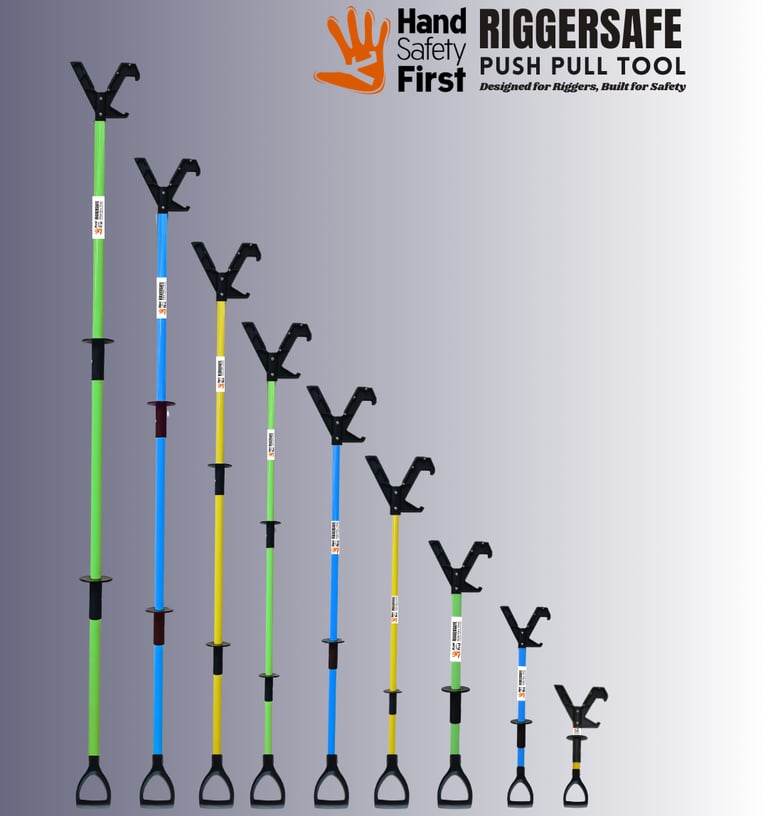
Precision Blue
Use Case: Offshore alignment, valve positioning
Benefit: High contrast for precision alignment
Industries: Oil & Gas, Shipbuilding, Marine Cargo
Safety Green
Use Case: Refineries, utilities, indoor plants
Benefit: High visibility in cluttered environments
Industries: Petrochemical, Utilities, Power PlantsBright Yellow (Flagship Safety Color)
Use Case: Construction, offshore decks, steel fabrication
Benefit: Maximum visibility for supervisors and riggers
Industries: Civil Construction, Offshore, Steel Fabrication
SIZE OPTIONS
21” – Confined spaces, vessels, subsea modules
24” – Mechanical rooms, utility vaults
36” – Drill floors, fabrication yards
42” – Offshore cargo handling
48” – Structural construction
50” – Pipeline yards, valve positioning
60” – Offshore platforms, ship decks
72” – Cargo handling, marine lifts
96” – Extreme offshore and high-risk lifts
INDUSTRIES SERVED
Oil & Gas
Renewable Energy (Wind & Solar)
Heavy Civil Construction
Marine & Shipbuilding
Utilities & Infrastructure
Mining & Fabrication Yards
HSF Safety Tools Dubai - Riggersafe Push Pull Tool as a Rigging Safety Solution
The HSF RiggerSafe Push Pull Stick is an engineering safety control designed to eliminate hand exposure during rigging. It allows riggers to guide and align loads from a safe distance, preventing crush and pinch injuries. RiggerSafe supports global rigging safety standards, enhances compliance, and improves precision and productivity in lifting operations.
Summary
Rigging safety is the systematic control of hazards associated with lifting and load handling operations. It focuses on eliminating worker exposure to suspended loads, preventing crush and pinch injuries, ensuring load stability, and maintaining certified equipment and trained personnel. For riggers, rigging safety is essential because they operate in high-risk environments where a single error can cause severe injury or fatality. Engineering controls such as push–pull tools are fundamental to modern rigging safety, transforming traditional manual rigging into a controlled, hands-free, and injury-prevention process.
What is a push–pull tool used for?
To guide and align loads while keeping hands away from danger.
Can it lift or hold loads?
No. It is NOT load-rated lifting equipment.
Why is centre of gravity important?
Loads shift toward the heavy side, causing sudden movement and pinch risks.
How should force be applied?
Straight, smooth, and controlled—never jerk or twist.
How much force is too much?
If you strain or use body weight, stop and signal the crane.
Does surface condition matter?
Yes. Dirt, oil, or rust reduces grip and control.
Why does tool angle matter?
Tilt reduces control and increases slip risk.
How close should hands be?
Minimum 600 mm (2 ft) away.
Can it guide suspended loads?
Yes, only to guide—not to stop or hold.
When do most injuries happen?
During load landing when slings slacken.
FAQ – PUSH PULL TOOLS FOR RIGGERS
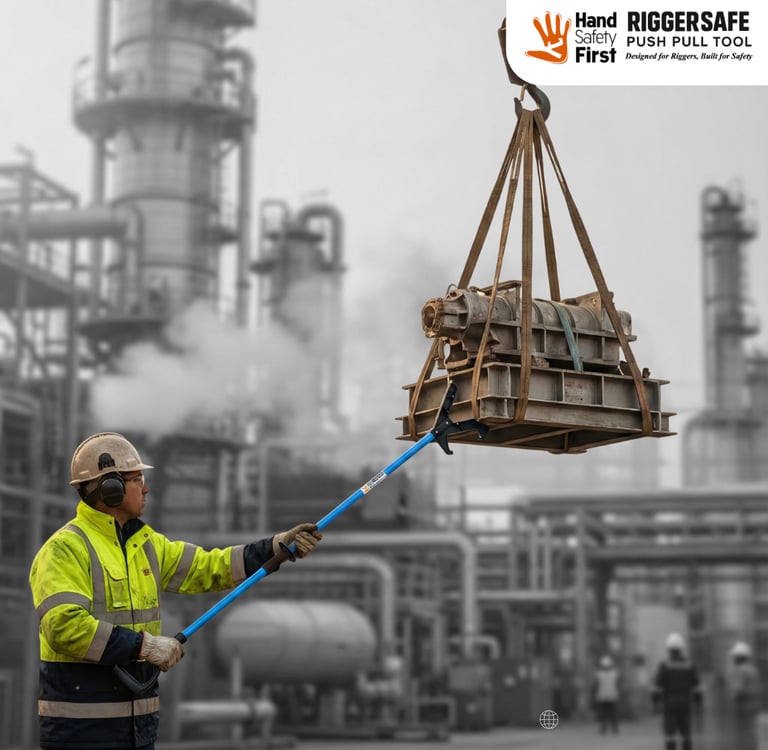
Application Images
Contact for Enquiries
Hand Safety First (HSF)
📞 +91 73861 10618
Contact
Reach out anytime for safety tool needs.
Email:
Phone:
+91 7386110618
© 2026. All rights reserved.
WEBSITE: